This is not the whole Hive story. It is one of the first places I could see its shape.
Before Hive had language, offers, infrastructure, or a name that could hold everything it would become, there was a glimmer, a sense that the systems around us were asking people to survive inside structures that were never built for their full humanity.
That glimmer mattered. But it was only one beginning.
What follows is a field note from that early formation. Not a finished framework. Not a complete origin story. A true beginning.
Earlier this week, my son and I did a small values exercise.
First, we each silently named our top three values. Then we tried to guess each other's values. After each guess, we shared where we saw that value show up in the other person's daily life.
It was simple.
It was also not simple at all.
"What do you think you value? What do you say you value? And what does your child experience you valuing by how you live?"
That last question stayed with me.
For a moment, my internal "bad mom" part twinged. Then I got curious.
I have spent years inside leadership systems. Corporate leadership development. Executive coaching. 360s. Assessments. Development plans. Operating models. Talent systems. Performance systems.
I have been coached.
I have been the coach.
I have designed the assessments, delivered the plans, and built the systems.
Those tools matter. They have a place.
But sitting there with my son, unprepared and unscripted, the question became much more direct:
"What does the person closest to me believe I value because of how I show up?"
That is a harder question than most leadership assessments ask.
And it may be the better one.
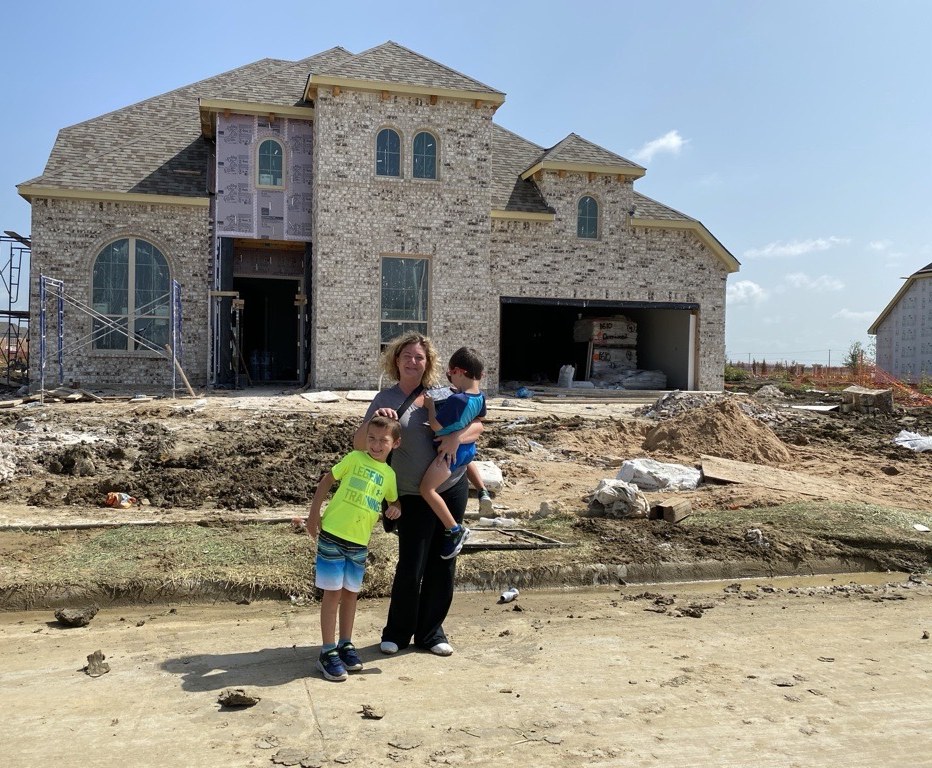
Six years ago, on July 4, 2020, I finalized the handshake deal for the first home my boys and I would live in.
At the time, I did not think of that home as my first deal.
I was making decisions under pressure.
Creating stability.
Figuring out the next move with what I had.
Learning how to build from the ground I was standing on.
A few days later, we stood in front of that house while it was still under construction. It was not polished. It was not finished. It was not certain.
But it was ours.
Or at least it was becoming ours.
Looking back, I can see something I could not name then.
That moment shaped the thesis behind Hive.
"People do not need saving. People are not problems to be fixed. People are capable. Resourceful. Intelligent. Resilient."
They can make hard decisions. They can rebuild, lead, grow, heal, and carry responsibility.
What often gets in the way is not human capacity. It is the fragmentation of the systems around us (work, health, family, law, community), each designed in its own lane, none of them designed for a whole life.
But human problems do not stay inside those lines.
A parent trying to stabilize a home is also managing work, money, childcare, legal questions, health needs, emotional load, transportation, safety, and time.
A business trying to grow is also dealing with people systems, customer systems, operating systems, financial pressure, leadership capacity, and trust.
A family trying to heal is also dealing with care access, legal access, employment pressure, housing, school, and community support.
That gap is part of what Hive is being built to address. Only part. There is much more still to come into view.